Food, Culture, Nature & History
Mérida, capital of Mexico’s Yucatan, offers something for everyone—food fanatics, nature lovers, culture vultures, history buffs and more.
Mexico and its people have always held a special place in my heart. Over the past 20 years, I’ve chosen to spend my winters immersing myself in the country—its diverse culture, food, and traditions—exploring new regions each season. Yet Merida remained on my bucket list, fueled by my fascination with all things Mayan. Last year, my husband and I finally set out for the capital of Yucatan State.
This handy travel guide to Mérida, Mexico, explores all the reasons to visit: food, culture, nature and history
Why Mérida Is One of Mexico’s Most Compelling Cities to Visit
Built quite literally atop Mayan temples and pyramids by Spanish conquistadors, this city boasts a cuisine and local traditions deeply influenced by the enduring Maya culture. Food, culture, nature, history—no matter your passion, Merida will exceed your expectations.
Merida gets its nickname, La Ciudad Blanca (The White City), from the predominance of white limestone used as a building material for the colonial mansions; although locals today will tell you it also has to do with the cleanliness and safety of this gateway to the Yucatan and Mayan culture. Some lore suggests the “white” moniker was due to early racial restrictions when the pale-faced Spanish conquistadors refused to let the dark-skinned Mayans live in the city.
Today, far from being just white, the historic center is now filled with buildings in shades of azure, blue, magenta, and soft pastels to help diffuse the intense Yucatán sunlight. Now Merida’s population is a colourful fusion of Maya, Spanish and other cultures and it’s lauded as being one of Mexico’s safest and most vibrant destinations.

Downtown Merida at night. Photo: Anita Draycott©
Merida for Culture Lovers
The Maya first made their way to the Yucatan Peninsula around 250 CE, arriving in Bacalar from Peten, Guatemala. Eventually, they moved north, arriving in what is now Merida. The city was established in 1542 by Spanish conquerors who built atop the ancient Maya city, T’ho. The Catedral de San Ildefonso, among the earliest cathedrals in the Americas, was constructed between 1561 and 1598 using stones from nearby Maya sites. While T’ho was destroyed by Spain, Maya culture survived. It’s estimated that more than half of Merida’s residents speak both Spanish and a Mayan language.
Merida became wealthy in the late 19th and early 20th centuries thanks to its once-booming henequen industry. Henequen is a fibre derived from the agave plant that was made into sisal (rope), often referred to as Yucatán’s “green gold.” Today, many of the sprawling haciendas that were once henequen plantations have been transformed into museums, restaurants, hotels, and more.
Free Cultural Activities
Merida’s City Council offers free cultural activities every day of the week. It’s a chance to mingle with Meridanos and enjoy traditional dance, folkloric musicals, Pok ta Pok (ancient Mayan ball game), handicraft markets—even a cemetery tour.
On the Plaza Grande, visit San Ildefonso Cathedral, the oldest on the continent, built between 1561 and 1598 using stones from Mayan pyramids and temples. Nearby, don’t miss the monumental carved stone façade of the Museo Casa Montejo, the mansion built by Merida’s founder, Francisco de Montejo.
Go to the Macay Museum, beside the Cathedral, for contemporary art; the City Museum explores local history. Tour the Palaio de Gobierno and Casa de Montejo historic buildings. Daily walking tours depart from the Municipal Building and offer an in-depth historical context in both English and Spanish. Most of these activities are centred on the Plaza Grande and the nearby parks, making for easy exploration. All are free.
On Fridays, the Monumento a la Patria, an imposing structure on Paseo de Montejo, comes alive thanks to “Isla de Luz,” a spectacular video mapping that projects images onto its detailed sculptures. This monument, a masterpiece by Colombian Rómulo Rozo, narrates Mexico’s history from pre-Hispanic times to the present.
Fancy a ball game? The pok ta pok, an ancient Mayan ritual, is still practiced today. Played to thank the gods for a good harvest and to ask for their protection, the game is played with a heavy rubber ball and a stone hoop. The winners were said to be sacrificed to the gods. Today, it’s a popular tourist attraction—with no sacrifices! Location: near Cathedral Sal Ildefonso.

Monumento a la Patria on Paseo de Montejo in Merida
Mérida is a UNESCO Creative City of Gastronomy Perfect for the Food Fanatic
In 2019, UNESCO recognized Mérida as a Creative City of Gastronomy. Thanks to trade routes and immigration, traditional Yucatan cuisine weaves together Maya, Caribbean, European, and even Middle Eastern flavours. The earthy tones of achiote spice meet the zest of sour oranges and the fiery kick of habanero peppers.
Traditional Maya cooking methods, such as the pib (an underground earth oven used for slow-cooking meats, including pork and turkey), date back at least to the 16th century. The centuries-old comal—a flat griddle used to char spices and cook tortillas—is still widely used today.
Mérida’s most beloved dish is cochinita pibil—tender pork marinated in a blend of achiote and citrus, wrapped in banana leaves, and slow-cooked underground.
For a real taste of Yucatán, try a relleno negro panucho—turkey marinated in an intoxicating black recado, which is a Maya spice mix that gets its signature colour from drying and burning chilies until they are completely charred. Another favourite— queso relleno, an irresistible concoction of hollowed-out Dutch Edam cheese brimming with ground pork, spices, olives, and more.
Iconic Local Products
UNESCO also highlights the importance of iconic local products that continue to shape Yucatán cooking today. These include stingless bee honey and wax, prized since pre-Hispanic times; native corn varieties; cacao; habanero and other local chillies; pork and venison; chaya, a nutrient-rich leafy green; and chicle, the natural gum once harvested for chewing gum production. Equally essential are the region’s distinctive recados — black, red, green and white seasoning pastes — which form the backbone of many traditional dishes.
Underlying all of this is the Milpa Maya, a centuries-old agricultural system centred on corn, beans, squash, and chilli peppers. Recently recognized by the Food and Agriculture Organization as a Globally Important Agricultural Heritage System, the milpa is both a farming method and a worldview. For the ancient Maya — the first civilization to inhabit this region — humans were believed to be children of corn, making food not just sustenance, but identity.
Hanal Pixán, the Maya Day of the Dead
Each autumn, from October 31 to November 2, Mérida becomes one of the most meaningful places in Mexico to experience Hanal Pixán, the Maya Day of the Dead tradition whose name translates as “Food for the Souls.” During this sacred period, families prepare altars and dishes meant to nourish visiting ancestors. Central to the celebration is mucbilpollo — a ceremonial dish whose name blends Maya and Spanish: muc (buried), bi (baked), and pollo (chicken). Cooked in corn dough, wrapped in banana leaves, and baked underground in a pib — the traditional Maya earth oven — it shares kinship with a tamal, yet carries profound spiritual significance.
Taste of the Yucatan Cooking Class
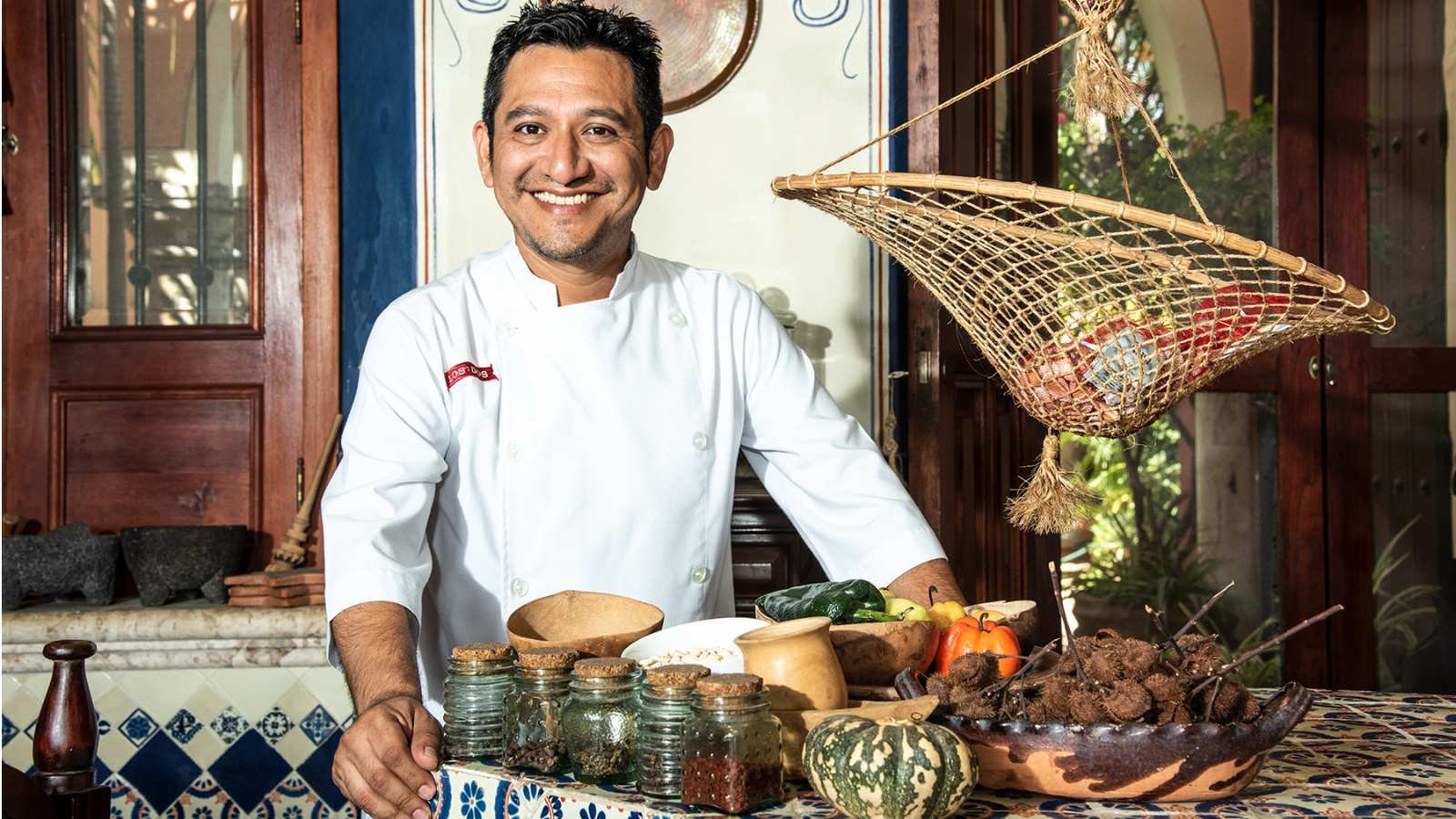
I recommend taking the full-day Taste of the Yucatan cooking class at Los Dos in central Merida. The experience includes a market tour, hands-on preparation of the region’s specialties and then enjoying the fruits of your labour at a sit-down meal in the colonial mansion. The classes are available on Tuesdays and Thursdays.
Where to Eat in Mérida
Chaya Maya
You have myriad choices. Savour traditional Yucatan cuisine at Chaya Maya, a lovingly restored traditional home where everything, including the tortillas, is made from scratch. The restaurant takes its name from chaya, a superfood chock-full of vitamins, fibre, protein and iron, which is often used in traditional drinks and dishes.
For a healthy breakfast drink, order a chaya juice.

Making tortillas from scratch at Chaya Maya in Merida, Mexico. Photo: Anita Draycott©
Colourful Mérida Market
Head to Merida’s market and central plaza, where you’ll find street food unique to the region, including panuchos (fried tortillas filled with black beans and topped with chicken or turkey, avocado, lettuce and pickled onions) and marquesitas (cheese-filled crepes).

Merida’s central market. Photo: Anita Draycott©
Where to Stay in Mérida
Rosas & Xocolate
At Rosas & Xocolate, guests are lavished with fresh roses and chocolates. The name is a nod to the use of cacao beans to make an early version of hot chocolate by the Mayans and Olmecs.
The boutique hotel on iconic Paseo de Montejo features 17 rooms, each with an outdoor Jacuzzi. The spa offers delicious treatments. such as rose petal exfoliations and chocolate wraps, using products from the hotel’s own brand. The hotel’s wine brand, produced in México’s Valle de Guadalupe, has been awarded international prizes, including a gold medal for its Chenin Blanc at the Concours Mondial de Bruxelles in 2023. Amenities such as soaps, chocolates, and shampoo products pay homage to the rose-and-chocolate theme.
Casa del Balam
Known as the “grandma” of Merida hotels, Casa del Balam, is a converted colonial home with a lovely fountain in the central courtyard, a swimming pool, hand-painted sinks, traditional wooden rocking chairs and wrought iron flourishes. It’s steps from the centre of town.
Best things to do near Mérida for Nature Lovers
Celestun Biosphere Reserve
The Celestun Biosphere Reserve is located to the west of the state, 92 km from Merida. The protected reserve, part of the UNESCO Man and the Biosphere Programme, is home to nearly 560 species of wildlife, including approximately 300 birds—a third of Mexico’s total bird species. Here, pink flamingos nest and breed from December to April (the best time to observe them is from 8 am to 12 pm). This ecosystem is also inhabited by jaguars, spider monkeys, ocelots, and crocodiles. Bring your camera and binoculars for a boat tour through the mangroves.
Unique to the Yucatan, cenotes are natural, water-filled sinkholes formed when limestone bedrock collapses, exposing groundwater below. The Mayans viewed cenotes as sacred places and believed they were gateways to Xibalba, the mythical underworld. These bodies of water were not only crucial sources of fresh water but also held deep spiritual significance as they were thought to be portals to the realm of gods and spirits. Now visitors can enjoy them recreationally.
Santa Barbara Cenotes
About an hour’s drive from Merida, the Santa Barbara Cenotes are a complex of three distinct crystal-clear sinkholes where you can swim. The Cascabel cenote is in a grotto with a narrow entrance. The Xooch cenote is partly open with majestic stalactites. The Cenote Cocom is open, with concrete stairs for easy access. Mandatory life jackets and transportation are provided with the entrance fee. There’s a restaurant on the property, so you can make a day of Mayan immersion.
Where to Eat
For the catch of the day, head to La Palapa on the beach at Celestun. Dig into succulent coconut shrimp served in a coconut shell, then wash them down with an icy Margarita. Bring your swimsuit, as the inviting, sugary-white beach beckons just steps away.

La Palapa on the beach at Celestun. Photo: Anita Draycott©
Where to Stay Near the Celestun Biosphere Reserve
Case de Celeste Vida
Just 1.5 km north of Celestun, Canadian-owned Case de Celeste Vida, a small guesthouse directly on the beach, offers rustic accommodations with fully equipped kitchens, purified water, Wi-Fi, and ocean views. Although there’s no air conditioning, oversized windows and ceiling fans keep the rooms comfortable.
Guests have access to numerous amenities, including bikes, kayaks, hammocks, a library, and an outdoor kitchen. The eco-friendly owners recycle rainwater, and bathrooms are equipped with low-consumption flush toilets and water-saving showerheads.
The owners can arrange flamingo tours and evening crocodile excursions.

Flamingos at Celestun Biosphere Reserve in Merida. Photo: Anita Draycott©
Xcanatun Angsana Heritage Collection
History and tradition converge at the Xcanatun Angsana Heritage Collection, about a half hour from central Merida. Restored to its 18th-century grandeur as a thriving henequen hacienda, the hotel has 54 suites, three swimming pools, a spa and restaurant. The staff offer a plethora of curated historical experiences in and around Merida. Consider ending your day with a romantic dinner by the on-property chapel.

Hacienda Xcanatun, Angsana Heritage Collection in Merida, Mexico. Courtesy Photo
Did You Know? Facts About Mérida in Yucatan, Mexico
- A 10-kilometre-wide asteroid struck the region near Mérida 66 million years ago, triggering the mass extinction that ended the age of dinosaurs. Known as the Chicxulub Impactor, it reshaped life on Earth.
- Mérida is surrounded by UNESCO World Heritage Maya sites, including Chichén Itzá and Uxmal.
- Celebrated chefs Miriam Peraza and Roberto Solís have appeared on Netflix’s Taco Chronicles, spotlighting Yucatán cuisine on a global stage.
- The Yucatán is home to some of the hottest chilli peppers in the world — and to the extraordinary stingless bees whose honey has been revered since Maya times.
Discover more about Mexico in our ongoing series, Los Cabos Luxury: All-Inclusive Quivira Golf Club and Pueblo Bonito Resorts is World Class, Insider’s Guide to Puerto Vallarta, Mexico and more coming soon.
Subscribe to Life’s Incredible Journey for more unforgettable travel guides, cultural experiences, and hidden gems—delivered straight to your inbox.
👉 Join the adventure here
Search for accommodation anywhere using Booking.Com, book a sightseeing tour using Viator or a flight with Expedia and any commissions earned will help keep this website running.

Related Posts
Amalfi Coast Travel Guide: Sorrento, Positano Ravello

25+ Ways to Celebrate Valentine’s Day in Vancouver